
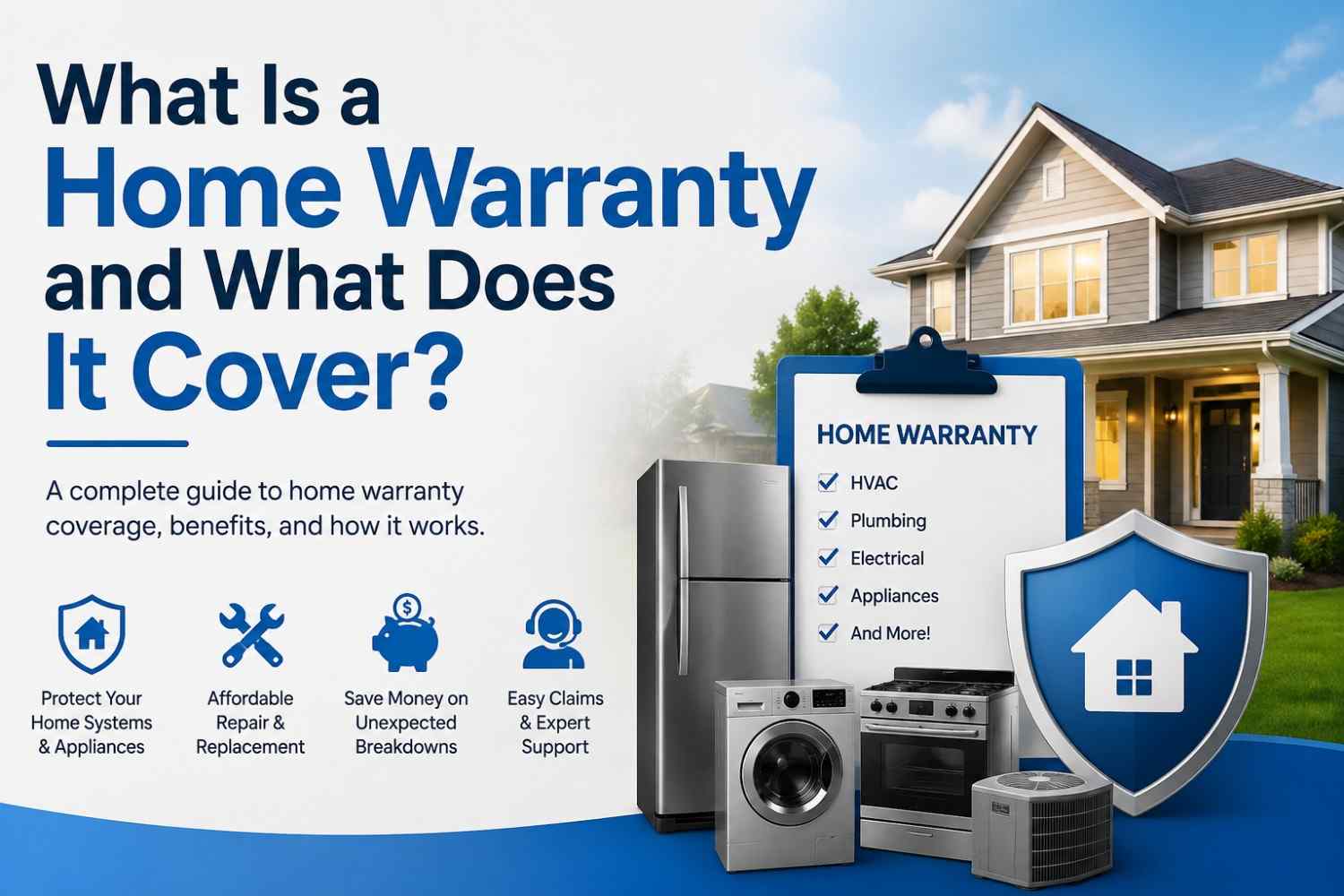
If you own a home, you have probably heard the term home warranty tossed around, sometimes confused with homeowners insurance. But a home warranty is a completely different type of protection, one that focuses on the systems and appliances inside your house rather than the structure itself. This guide explains exactly what a home warranty is, what it covers, and whether it is worth adding to your home protection plan.
What Is a Home Warranty?
A home warranty is a service contract that covers the repair or replacement of major home systems and appliances when they break down due to normal wear and tear. Unlike homeowners insurance, which protects against sudden events like fire or storm damage, a home warranty steps in when your furnace stops working, your dishwasher quits, or your water heater fails simply because it got old.
You pay an annual or monthly fee for a home warranty plan, and when a covered item breaks down, you file a claim and pay a small service fee for a technician to come diagnose and fix the problem. This makes budgeting for home repairs far more predictable.
Home Warranty vs Homeowners Insurance
Many new homeowners assume a home warranty and homeowners insurance are the same thing. They are not, and understanding the difference matters:
- Homeowners insurance covers damage from events like fire, theft, and severe weather
- A home warranty covers breakdowns from age and normal use
- Homeowners insurance is often required by mortgage lenders
- A home warranty is optional and purchased separately
Many homeowners choose to carry both, since they protect against very different risks.
What Does a Home Warranty Typically Cover?
Coverage varies by provider and plan level, but most home warranty contracts include protection for the following categories.
Major Appliances
- Refrigerators
- Ovens and ranges
- Dishwashers
- Washers and dryers
- Garbage disposals
Home Systems
- Heating systems
- Air conditioning units
- Electrical systems
- Plumbing systems
- Water heaters
Optional Add Ons
Many home warranty companies offer additional coverage for an extra fee, such as:
- Pools and spas
- Septic systems
- Well pumps
- Second refrigerators or freezers
- Roof leak coverage
What a Home Warranty Does Not Cover
A home warranty typically will not cover issues caused by any of the following:
- Poor maintenance or neglect
- Pre existing conditions that were not disclosed
- Code violations discovered during a repair
- Cosmetic damage
- Structural issues, which usually fall under homeowners insurance instead
Reading the fine print of your home warranty contract before signing will help you avoid surprises at claim time.
How Does the Home Warranty Claims Process Work?
Filing a claim with a home warranty company generally follows these steps.
- Contact your home warranty provider by phone or online portal
- Describe the issue with your appliance or system
- Pay the required service call fee
- A licensed technician is dispatched to inspect and repair the item
- If the item cannot be repaired, the home warranty company arranges a replacement based on your plan terms
Most home warranty companies aim to schedule service within 24 to 48 hours of a claim being filed.
Is a Home Warranty Worth It in 2026?
Whether a home warranty makes sense for you depends on a few factors:
- The age of your home’s appliances and systems
- Whether you have savings set aside for unexpected repairs
- How comfortable you are handling repair logistics yourself
- The reputation and coverage terms of the specific provider you are considering
For owners of older homes with aging systems, a home warranty can offer real peace of mind and predictable costs. For newer homes still under manufacturer warranties, the value may be lower, at least for the first few years.
Tips for Choosing the Right Home Warranty Plan
- Compare coverage limits for each appliance and system before buying
- Read customer reviews focused on claims experience, not just sales calls
- Understand the service fee and how it affects your total cost
- Check whether you can choose your own technician or must use the company’s network
- Look closely at exclusions and coverage caps in the contract
Final Thoughts
A home warranty can be a smart way to protect your budget from the unpredictable cost of appliance and system breakdowns. By understanding what a home warranty covers, how it differs from homeowners insurance, and what to look for in a plan, you can make a confident decision about whether this added protection fits your home and your finances in 2026.





[…] Previous […]