
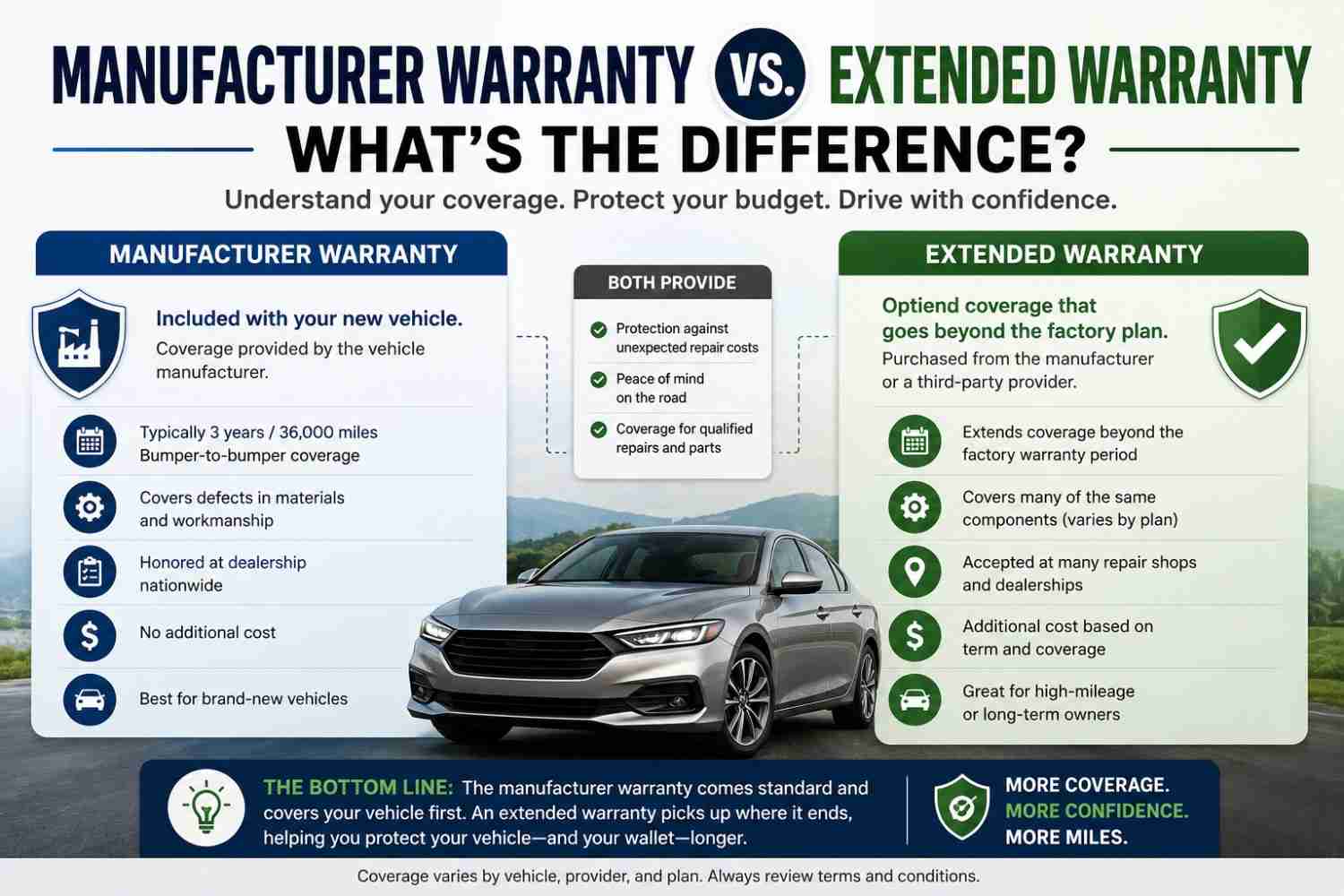
When you buy a car, appliance, or piece of electronics, you’re usually handed some paperwork about coverage and told not to lose it. Most people nod, sign, and move on without really understanding what they just agreed to. That’s where the manufacturer warranty vs extended warranty confusion begins, and it’s a mix up that can cost you real money down the road.
Understanding the difference between these two types of coverage isn’t just a technicality. It affects how much you’ll pay out of pocket if something breaks, how long you’re protected, and whether you need extra coverage at all. Let’s break it down in plain terms.
What Is a Manufacturer Warranty?
A manufacturer warranty is the coverage that comes automatically with a new product. Whether you buy a car, a laptop, a washing machine, or a smartphone, the company that made it typically backs the product for a set period, often between one and five years depending on the item.
This type of warranty is included in the purchase price. You don’t pay extra for it, and you don’t have to sign up separately. It’s the manufacturer’s promise that the product will work as intended and that they’ll fix or replace it if something goes wrong due to a defect in materials or workmanship.
Manufacturer warranties usually cover:
- Defects in materials or craftsmanship
- Parts that fail under normal use
- Certain labor costs for repairs
- Replacement of the product if it can’t be repaired
What they typically don’t cover includes accidental damage, normal wear and tear, or issues caused by misuse. If you drop your phone in water or run your car without oil changes, the manufacturer warranty likely won’t help you.
What Is an Extended Warranty?
An extended warranty, sometimes called a service contract or protection plan, is coverage you purchase separately, either at the time of sale or later. It’s designed to pick up where the manufacturer warranty leaves off, or in some cases, to add coverage the original warranty never included in the first place.
Extended warranties are sold by the manufacturer itself, the retailer, or a third party warranty company. They come at an added cost, and the price can vary widely depending on the product, the length of coverage, and what’s included.
Unlike a manufacturer warranty, an extended warranty is optional. You choose whether to buy it, how long the term should be, and sometimes even which specific components are covered. Some extended plans mirror what the manufacturer originally offered, while others expand into areas like accidental damage or mechanical breakdowns that standard warranties skip entirely.
Manufacturer Warranty vs Extended Warranty: Key Differences
Now that you know what each one is, here’s how they stack up against each other in the areas that matter most.
Cost
The manufacturer warranty comes free with your purchase. An extended warranty always has a price tag, whether it’s a flat fee or a monthly payment plan.
Coverage Period
Manufacturer coverage kicks in the moment you buy the product and runs for a fixed term set by the maker. An extended warranty typically begins once that original coverage ends, stretching your protection further into the future.
Who Provides It
The manufacturer warranty comes straight from the company that built the product. Extended warranty plans can come from the manufacturer, the store where you bought the item, or an independent warranty provider.
What’s Included
Manufacturer warranties focus narrowly on defects and workmanship. Extended warranties often cast a wider net, sometimes including things like power surge protection, accidental spills, or mechanical failure that wouldn’t be considered a manufacturing defect.
Flexibility
You have no say in what a manufacturer warranty covers. With an extended plan, you can often choose your coverage level, deductible, and contract length based on your budget and how long you plan to keep the product.
Do You Actually Need an Extended Warranty?
This is the question that matters most, and the honest answer is that it depends on the product and your own risk tolerance.
For expensive, complex items like cars or major appliances, an extended warranty can offer `real peace of mind, especially once the manufacturer warranty vs extended warranty gap opens up and you’re no longer protected by the original coverage. Repair costs for things like transmissions, HVAC systems, or built in appliances can run into the thousands, and a solid extended plan can soften that blow.
For smaller, cheaper items, it’s often not worth it. A $30 extended warranty on a $150 blender rarely pays for itself, especially since many of those products either work fine for years or fail early enough to still be under the original manufacturer warranty.
Before buying an extended plan, ask yourself a few questions:
- How reliable is this brand historically?
- How expensive would a repair or replacement actually be?
- Does my credit card already offer extended warranty benefits?
- How long do I realistically plan to keep this product?
That last point matters more than people think. If you tend to upgrade your phone or car every couple of years, you may never even need coverage beyond what the manufacturer already provides.
Reading the Fine Print
Whichever type of warranty you’re dealing with, the details matter. Manufacturer warranties can have exclusions buried in the paperwork, like requiring proof of professional installation or regular maintenance records. Extended warranties are notorious for exclusions too, and some plans are far less comprehensive than the sales pitch implies.
Before signing anything or paying for extra coverage, read through what’s actually covered, what voids the warranty, and how claims are processed. A warranty is only as good as the company standing behind it and the terms written into the contract.
The Bottom Line
The manufacturer warranty is your baseline protection, included automatically and focused on defects. The extended warranty is an optional add on that extends or broadens that coverage, at a cost, for people who want extra security once the original protection runs out.
Neither option is universally right or wrong. It comes down to what you’re buying, how much a repair would actually cost you, and whether you’d rather pay a bit more upfront or take your chances later. Understanding manufacturer warranty vs extended warranty coverage before you buy puts you in a much stronger position to make that call with confidence instead of guesswork.

[…] Previous […]